Be yourself; Everyone else is already taken.
— Oscar Wilde.
This is the first post on my new blog. I’m just getting this new blog going, so stay tuned for more. Subscribe below to get notified when I post new updates.
Be yourself; Everyone else is already taken.
— Oscar Wilde.
This is the first post on my new blog. I’m just getting this new blog going, so stay tuned for more. Subscribe below to get notified when I post new updates.

Any Online Jobs or Online Part Time Jobs provider asking any Money, Registration fees or upfront payment is a SCAM. Real Internet Jobs like CYBER EXPO never ask any payment from there customer.
Don’t Get Confused with fake Company Email Address, Fake Company Name, and Fake Websites.
Very often the Scammer uses a fake similar looking email address to trick people.
Take an Example, The real email address of CYBER EXPO official is info@cyberexpo.in and info@adpostjob4u.com,
So scammer may send you to email using an email address like this –
infocyberexpo@gmail.com
cyberexpo@outlook.com
So be careful while receiving any job-related email.
If you are not sure the email address is genuine or not try to visit the company websites address or call them and verify the email address.
A lot of scammers creates fake Company which Sound similar to the Real company. Such as “Placement India” is the real company name, and scammer may use Placement media and trick you.
Fake Websites: Most of the scam happen with a fake website, now a day’s web hosting and domain registration are so cheap that Jobs scammer creates dozens of fake websites and making fraud by taking hug registration fees from India people.
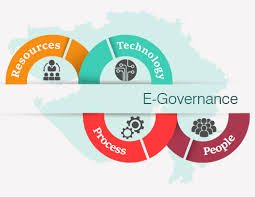
Definition: E-governance, expands to electronic governance, is the integration of Information and Communication Technology (ICT) in all the processes, with the aim of enhancing government ability to address the needs of the general public. The basic purpose of e-governance is to simplify processes for all, i.e. government, citizens, businesses, etc. at National, State and local levels.
In short, it is the use of electronic means, to promote good governance. It connotes the implementation of information technology in the government processes and functions so as to cause simple, moral, accountable and transparent governance. It entails the access and delivery of government services, dissemination of information, communication in a quick and efficient manner.
Through e-governance, the government plans to raise the coverage and quality of information and services provided to the general public, by the use of ICT in an easy, economical and effective manner. The process is extremely complicated which requires, the proper arrangement of hardware, software, networking and indeed re-engineering of all the processes to facilitate better delivery of services.

This article needs more medical references for verification or relies too heavily on primary sources. Please review the contents of the article and add the appropriate references if you can. Unsourced or poorly sourced material may be challenged and removed. (June 2019)
Rod of Asclepius2.svg
Video game addiction also known as gaming disorder or internet gaming disorder is generally defined as problematic, compulsive use of video and/or internet games, that results in significant impairment in an individual’s function in various life domains over a prolonged period of time. This and associated concepts have been under considerable research, debate and discussion among experts in several disciplines, and have generated controversy from the medical, scientific and gaming communities. The disorder may present itself as compulsive gaming, social isolation, mood swings, diminished imagination, and hyperfocus on in-game achievements, to the exclusion of other events in life.[3][4] Such disorders can be diagnosed when an individual engages in gaming activities at the cost of fulfilling daily responsibilities or pursuing other interests, and without regard for the negative consequences.
The American Psychiatric Association has identified nine warning signs to watch for when it comes to video game addiction. Although these can be helpful to better understand the severity of your own situation, it’s important to always seek the advice of a professional.
The previous traditional set of marketing was limited to door to door and mouth publicity. Previously the marketers were using physical manpower to promote their products. But now with the changing times, people want everything at their fingertips.
And fulfilling the needs of the customers is the highest priority of every business. So the trend of digital marketing took off a few years back. Now that even the smallest thing can be found on the internet. People and the marketers are really going gaga over this digital marketing trend.

How was the marketing for real estate earlier? It was mostly through print media or banners. But now, all the real estate giants are preferring the digital platform to market their blissful homes to their customers. Making the content engaging is now their mantra to succeed.
If we look at the above screenshot of Hiranandani’s Facebook page then it is clearly visible that the real estate giant is targeting people with real-time pictures. If people are able to see the exact pictures of the product, they would intend to buy it.
In this way, we all can clearly see the difference of how the traditional marketing has seen a drastic change. And it has been taken over completely by digital marketing.
Everyone in the country is preferring digital marketing over everything else. Even the startups are launching their business via digital marketing. This platform eases the process of every business. The company doesn’t have to deploy the manpower to go physically into the market and promote the product.
It offers a wide range of economical, powerful and contemporary mechanisms and mediums of marketing. Every type of product and service is now opting for the option of digital marketing.Because they know that this is the proven platform. Right from tech giants to hoteliers are on the digital platform.

It is not that the business owners are promoting their product always. They try to engage with their audience through various facts. Above is the screenshot of a famous Pav Bhaji joint in Nashik, Maharashtra. Being a small scale hotelier, they are choosing the digital marketing option to reach out to a larger bunch of people. This is not by informing the audience about their product. But instead, they have posted some engaging content that would interest the viewers. Thus, such kind of tricks is working a lot for the marketers these days.
In order to transform the entire ecosystem of public services through the use of information technology, the Government of India has launched the Digital India programme with the vision to transform India into a digitally empowered society and knowledge economy.
Now, the opportunities are not only available in metro cities but also in small towns. The government has also come up with the application for Employment programs. Everything is going digital these days. Thus, if we talk about, digital marketing career in India, then you are at the right place. Stop debating over the choices and get to know what benefits it holds.
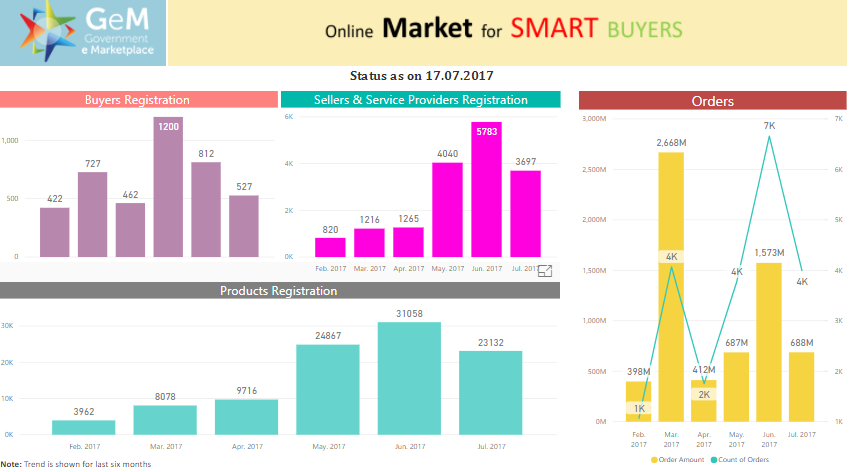
The government’s e-marketplace is also seeing a considerable rise in its e-marketplace analytical graphs. All the registrations have gone up with minor fluctuations. The fluctuations happen at every place. People in India are getting to the technology slowly and it is going to take some time to get acquainted with it.
All of this means that if the government is also giving a helping hand, then why to avoid it! Government is coming up with many projects under digital India initiative for the youths of the country.
Indian Prime Minister announced that by 2020 on the digital space there would be more than 20 Lakhs available to students. Moreover, during the launch of Digital Indiaweek many industries joined hands with the government to make e-India a reality.
Today, it is said that “Being Digital is Being Global”. And this is the reality. Through digital platforms like Facebook, Twitter, Instagram, LinkedIn, one can reach to the audience of any corner of the world. The reach of these social media platforms is so huge that you can connect with almost everyone now.
In India, many people are doing business whose target audience is the USA only. So anything is possible with social media. many companies from the USA also prefer Indian Digital Marketing Agencies to plan out their social media campaigns.
In other words, there’s a lot happening in India’s digital marketing space. Many people are talking about it and searching for it as well.
Many institutions are nowadays introducing degree courses in digital marketing that has a practical approach. The academic courses are residential and online both.
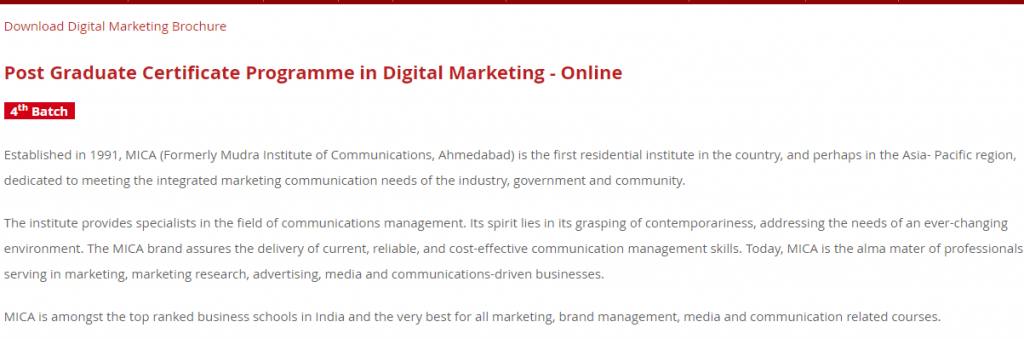
Mudra Institute of Communication is India’s topmost college to learn communication. The college is offering a certification program in digital marketing. Also, it offers courses in branding and advertising. There are many other colleges who are coming up with a curriculum that involves digital marketing.
Even many digital marketing agencies now have their own academy where they teach digital marketing to the prospective students. It is as simple, when there is demand, there has to a proper supply. The demand for digital marketing is on the rise and those who know are coming up with ideas to train the students.
Metros are already a part of the digital economy. But now as the scope of digital marketing is increasing, the towns and cities are also getting highly connected with digital mediums.
Many startups are getting launched in small cities and they are reaching the global audience via social media.
If we take an example of online portal ScoopWhoop, it was started by Sattvik Mishra and 5 others in August 2013 in Delhi. But the way they were writing their content and posting it on social media made them starts overnight. Everyone in the country is a fan of content that this web portal is generating. They are completely accomplished on social media today with more than 1000 likes on each post.

Comparing it with other marketing platforms, digital marketing is one of the most affordable media to promote the product. Gone are the days when one was spending thousands and lakhs n getting the ad printed in the newspaper. With digital media, it has become so easy. If you are a real estate company, you can promote your new project on social media by reaching thousands of people at one time.
Creating an ad on Facebook hardly costs around ₹40 per day, which is nothing. Average cost per click is ₹0.52 to ₹2.3. Spending lakhs of rupees on a single ad and spending just ₹40 per day can give good results.
Many industries and new start-ups, all are heavily investing in the digital marketing activities. They are looking for people who can devise and implement digital marketing strategies that suit their needs.
Since people are heavily using social media for everything, the engagement rate ought to be higher. People need quality content for updating themselves and getting entertained. So it is the responsibility of the digital marketers to generate content that engages the audience.

The online food delivery service, keeps its audience engaged all the time by posting creative content on the Facebook page. Their page is all about food but they make it so creative that one cannot scroll it down without hitting the like button.
So the bottom line is, if you are creative, you will be a big hit on the digital platform.
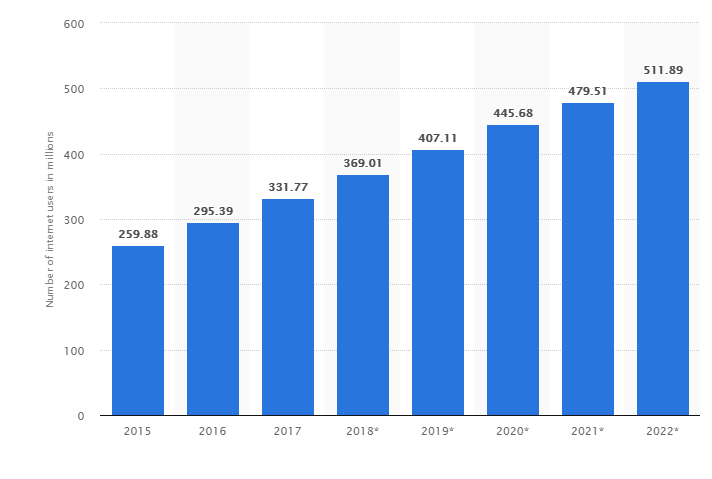
The above graph clearly says everything. People using the internet in 2015 were 259 million which go up to 331 million in 2017. It has been predicted that the number internet users are to get doubled by 2022. This is because, the rate in which the country is growing in terms of everything, people will be heavily dependent on the internet in the coming years.
It has also been predicted that the revenue generating from digital classifieds is going to be five times more than it was in 2015. In the financial year 2020, the highest revenue will be around ₹23 billion.
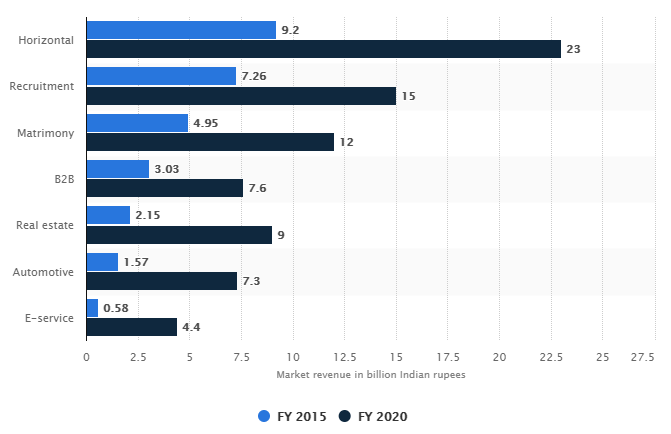
All the revenues will be doubled by 2020 in the field of digital marketing. Therefore, in order to put yourself in the driving seat, all the Indian business have to be well-worse with digital marketing in order to represent the country in the global marketplace. Not only businesses but the candidates who are looking for a career opportunity in this field can finds lakhs of jobs in almost all the cities.
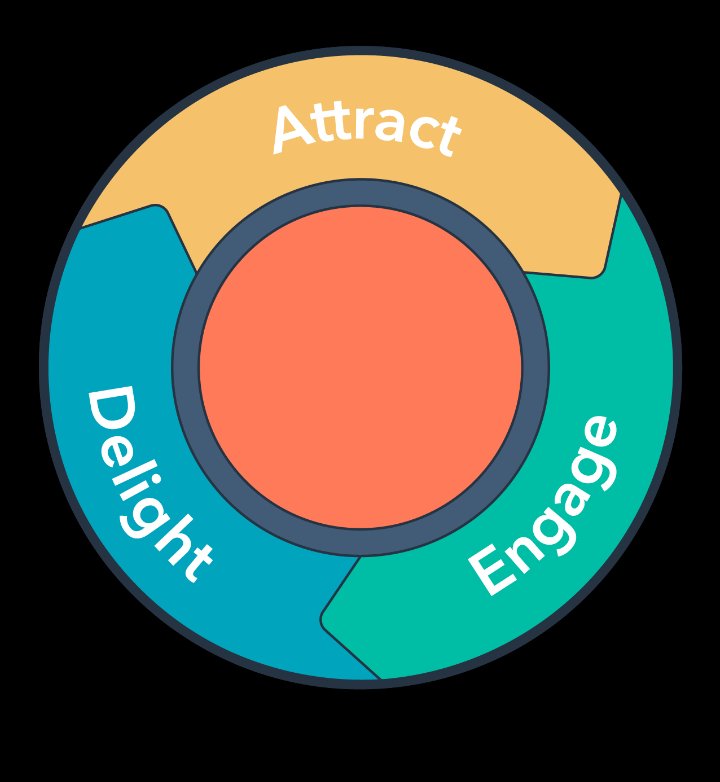
Inbound marketing is a technique for drawing customers to products and services via content marketing, social media marketing, search engine optimization and branding.
Inbound marketing provides improved customer experience and tries to build trust by offering potential customers information they value via company sponsored newsletters, blogs and entries on social media platforms.
Compared with outbound marketing, inbound reverses the relationship between company and customer. In fact, while outbound marketing pushes the product through various channels, inbound marketing creates awareness, attracts new customers with channels like blogs, social media, etc.

Online Public Relations (E-PR, Digital PR) functions the web relationship influence among the cyber citizens and it aims to make desirable comments about an organization, its products and services, news viewed by its target audiences and lessen its undesirable comments to a large degree. Online public relations shows differences from traditional public relations. One of these is associated with its platforms. Compared with traditional public relations channels (such as TV, radio and printed press), the network systems used for online public relations vary from search to social platforms. In the era of digital marketing, the major online public relations tools for the public relations professionals and marketers such as content marketing, search engine optimisation are the results of mixture of digital technologies and public relations. Those approaches have become the mainstream digital marketing machines and learning to take advantage of these marketing tools is an essential part of modern public relations strategies.

Marketing automation refers to software platforms and technologies designed for marketing departments and organizations to more effectively market on multiple channels online (such as email, social media, websites, etc.) and automate repetitive tasks.
Marketing departments, consultants and part-time marketing employees benefit by specifying criteria and outcomes for tasks and processes which are then interpreted, stored and executed by software, which increases efficiency and reduces human error. Originally focused on email marketing automation, marketing automation refers to a broad range of automation and analytic tools for marketing[2] especially inbound marketing. Marketing Automation platforms are used as a hosted or web-based solution, and no software installation is required by a customer.
The use of a marketing automation platform is to streamline sales and marketing organizations by replacing high-touch, repetitive manual processes with automated solutions.
Marketing automation is a platform that marketers use to plan, coordinate, manage and measure all of their marketing campaigns, both online and offline. It is often used along with lifecycle marketing strategy to closely manage and nurture generated leads, aiming to convert leads into customers.

Native advertising is a type of advertising, mostly online, that matches the form and function of the platform upon which it appears. In many cases it functions like an advertorial, and manifests as a video, article or editorial.The word “native” refers to this coherence of the content with the other media that appear on the platform.
Native advertising is produced by an advertiser with the specific intent to promote a product while matching the form and style which would otherwise be seen in the work of the platform’s editorial staff.
An important aspect of advertising in general is net impression, which is a reasonable consumer’s understanding of an ad. The power within native advertising, however, is to inhibit a consumers’ ad recognition by blending the ad into the native content of the platform, making many consumers unaware they are looking at an ad to begin with. The sponsored content on social media, like any other type of native advertising, can be difficult to be properly identified by the Federal Trade Commission because of the rather ambiguous nature. Native advertising frequently bypasses this net impression standard, which makes them problematic.
Product placement (embedded marketing) is a precursor to native advertising. Instead of embedded marketing’s technique of placing the product within the content, in native marketing the product and content are merged.
While there is, to a degree, a merger of advertising and content, native advertising is legally permissible in the US to the extent that there is sufficient disclosure.
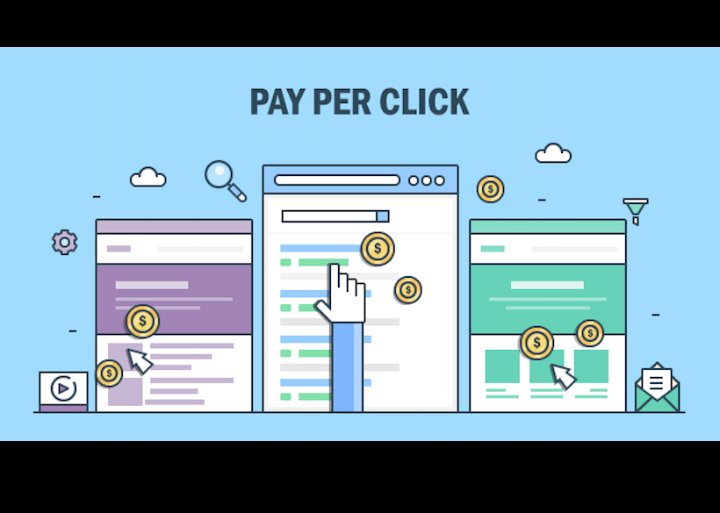
Pay-per-click (PPC), also known as cost per click (CPC), is an internet advertising model used to drive traffic to websites, in which an advertiser pays a publisher (typically a search engine, website owner, or a network of websites) when the ad is clicked.
Pay-per-click is commonly associated with first-tier search engines (such as Google Ads and Bing Ads). With search engines, advertisers typically bid on keyword phrases relevant to their target market. In contrast, content sites commonly charge a fixed price per click rather than use a bidding system. PPC “display” advertisements, also known as “banner” ads, are shown on web sites with related content that have agreed to show ads and are typically not pay-per-click advertising. Social networks such as Facebook and Twitter have also adopted pay-per-click as one of their advertising models.
However, websites can offer PPC ads. Websites that utilize PPC ads will display an advertisement when a keyword query matches an advertiser’s keyword list that has been added in different ad groups, or when a content site displays relevant content. Such advertisements are called sponsored links or sponsored ads, and appear adjacent to, above, or beneath organic results on search engine results pages, or anywhere a web developer chooses on a content site
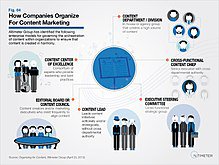
Content marketing is a form of marketing
focused on creating, publishing, and
distributing content for a targeted audience
online. It is often used by businesses in
order to:
Attract attention and generate leads
Expand their customer base
Generate or increase online sales
Increase brand awareness or credibility
Engage an online community of users
Content marketing attracts prospects and
transforms prospects into customers by
creating and sharing valuable free content
Content marketing helps companies create
sustainable brand loyalty, provides valuable
information to consumers, and creates a
willingness to purchase products from the
company in the future. This relatively new
form of marketing does not involve direct
sales. Instead, it builds trust and rapport with
the audience.
Types of Content :-
1. Blogs
Blogging is one of the most popular types of content marketing for small businesses. And for good reason! Blogs are one of the best ways to improve SEO and drive more organic traffic to your site from the search engines. This can help you make the most of your limited marketing budget by supplementing any advertising with inbound content.
In fact, according to Forbes, websites that include a blog typically have 434% more indexed pages than those that don’t. This means that sites with blogs have a greater chance of ending up on the first page of search engines like Google when consumers search for relevant keywords. Additionally, business sites with blogs have 97% more inbound links, which also helps with search engine optimization.

As you can see from the graphic above, there are a variety of benefits for businesses that blog regularly.
Not only does blogging help improve your search engine optimization, but it’s also a great way to build relationships with your leads and current customers. The more valuable content you provide, the more likely your target audience will be to consider your brand when they are ready to purchase. Blogs are an effective way to provide value through short-form content.
If you want to use blogging to improve your content marketing and grow your business, you’ll need to start with a strategy that includes which topics you plan to cover in your blog. Do some keyword research to see what consumers are typing into the search engines to find brands like yours. Then, consider what other topics or questions might be relevant and create blog content around these topics.
2. Videos
If you want to remain competitive in the busy digital marketplace, it’s vital that you find a way to grab your target audience’s attention and engage them quickly. Consumers today are viewing more video contentthan ever before. In fact, one-third of all online activity is spent watching video content. This fact makes video one of the best types of content marketing for reaching and engaging your target consumers, no matter what industry you are in.
Video is a great content marketing tactic for small businesses because it provides such an appealing return on investment. According to BrightCove, brands that use video can expect to see an average increase of 157% in organic traffic from search engines. Video also helps increase time spent on site by 105%. The more time your customers spend on your website, the greater your company’s chances of making a sale. In addition to that, check out these statistics:

When it comes down to it, you just can’t ignore the power of valuable video content.
If you’d like to harness the power of video you will need to consider what types of content and topics will appeal to your audience most. This will ultimately depend on where your audience is in the buyer’s journey. Short and attention-grabbing informational videos can help you engage consumers in the awareness stage. While how-to videos and product demos are great for influencing purchasing decisions among consumers in the decision stages.
3. Infographics
Infographics help businesses educate their audiences and provide useful information that can add value for leads and customers. This visual content marketing format helps viewers better visualize data such as statistics so that they can have a better idea of why something is valuable or how something works. Here’s an example of a compelling infographic from NY Brite, a home and office cleaning company:

This infographic explains different elements of carpet cleaning that consumers need to be aware of. Notice that the infographic is branded with NY Brite’s logo.
In this example, the cleaning company is educating its audience about different factors involved with carpet cleaning while simultaneously explaining the benefits of hiring a professional carpet cleaner. The infographic also uses eye-catching visuals that are relevant to the topic and make it easier for the viewer to understand the information that’s presented.
If your business chooses to use infographics to attract and engage your audience, consider which topics are best suited for this format. Typically, any information that would benefit from a visual aid can make an excellent infographic topic. You can use infographics to explain a complicated subject, present statistics that help others understand the value of what your business provides, or even offer a diagram of your product.
If you’re interested in producing more infographics for your business, contact us to learn more about how our team of talented designers can help.
4. Case Studies
Another one of the most valuable types of content marketing is the case study. Case studies are basically customer stories that illustrate how your business has helped a specific client or customer become successful. Businesses can use case studies to highlight special applications or uses for their services and products.
Consumers like case studies because this type of content helps them better understand how your brand can add value in their lives or businesses. Though you can provide general applications or uses for your products or services, a real-life example is often more valuable as it helps your business build trust with new leads.

Case studies are effective because they help leads better understand how your business can help them.
If you plan to use case studies as part of your content marketing, it’s important that you carefully consider which of your customers you ask to serve as a case study example. Strategically choose those customers who your products or services have benefited in a significant way. You also want to work with customers or clients who are willing to provide not only their permission to be used as the subject of the case study but also some quotes and statistics that illustrate how your business has helped them succeed.
Case studies can be housed on your company website, but you may also want to use them in other ways. You can use case study examples in your blogs, eBooks, social posts and other types of content. Your sales team may also want to use these pieces of content when talking with leads. For instance, if the new lead has similar characteristics of a past customer who is featured in a case study, then the sales person may want to provide the lead with the case study so that they can better understand the value your business might provide.
5. eBooks
eBooks are an effective type of long-form content that businesses can use to provide value for their leads and customers. The keyword here is value. Your eBook should not be a 5 to 10 page ad. Instead, it should provide some type of useful information and insight for your target audience about their needs and challenges. Like many other types of content marketing, it’s not about selling to your audience, it’s about building a relationship with target consumers so that they trust your brand and come to you when they’re ready to make a purchase.
eBooks are one of the best types of content marketing for collecting lead information. That’s because they are typically gated, which means that visitors must provide some type of information about themselves in exchange for the eBook download.

This is an example of what our digital marketing eBook promotion looks like on a our site.
It’s important to note that eBooks require a bit more of an investment than some other types of content marketing like blogs or social posts. They are longer and more involved to create. However, don’t let this scare you off from creating an effective eBook. The leads that you will generate through this piece of gated content will provide an attractive return on investment that will make any time or money you invest into the project worthwhile in the end.
6. White papers
White papers are similar to eBooks in a lot of ways. The whitepaper is another type of long-form content that can be effective as a lead magnet. However, the main difference between eBooks and white papers is that white papers tend to be a bit more information-dense, data-driven, and detail-focused. This makes whitepapers one of the best types of content marketing for B2B and other small businesses that want to build thought leadership and gain more respect in their industry.
One of the greatest benefits of white papers is that they can help your small business gather information about new leads. According to a 2019 Intercom report, 76% of buyers surveyed said they were willing to share information about themselves with a business in exchange for a white paper. This information that consumers share with your business not only gives you better insight into your target audience but provides a way for you to keep in touch with a lead long after they have downloaded the content.
If you want to take advantage of the opportunity to collect lead information, you’ll need to ensure that your white paper is gated. Here’s an example of what that might look like:

Your whitepaper can be a piece of gated content that requires the lead to provide information about themselves before they download the content.
Notice that the landing page content was created specifically for this white paper download. The landing page tells the reader what they can expect to get from the piece of content. While the lead form asks for information that will help the company better understand who the lead is and what they might need.
7. Checklists
Checklists are a type of worksheet that provide a list of things to do in a step-by-step process in order to achieve some type of desired outcome. These are great content assets for small businesses because they are easy to create and promote, yet still provide a significant value for the target audience.
In order to better understand how this type of content marketing works, let’s take a look at an example checklist from an HVAC company:

This checklist from One Hour Heating & Air Conditioning provides homeowners with valuable information they need to make smarter decisions about their HVAC service.
The checklist above provides a list of actions that homeowners should take regarding their HVAC system. The checklist is easy to read and follow, and it provides valuable information to help the company’s target audience make smarter decisions about their HVAC maintenance. This is a great example of what a checklist should be as it focuses on providing value for the reader.
After you’ve created a checklist on a relevant topic, you can share your checklists on social media or even incorporate them into a blog post. The more you share and repurpose your checklist content, the more value your business gets out of the investment.
8. Interviews
Interviews with industry experts or even your own customers are another one of the most high-performing types of content marketing. Interview content provides valuable information for your site visitors that can help them better understand their challenges and needs. Not to mention, it is a great way to position your company as an expert in the industry.

Here is an example of an organization using an interview with an expert to provide valuable information for their target audience.
There are a few different ways that you can use interviews as part of your digital marketing campaigns:
The key to leveraging interview content is making sure that the material will provide some type of value for your target audience. Choose interview subjects that can offer useful insight and information on the topics that matter most to your leads and customers.
9. Social Media Posts
At this point, it’s no longer a secret that small businesses can harness the power of social media to reach their target audiences. Social media platforms like Facebook, Twitter, and Instagram help businesses reach new audiences and nurture relationships with customers. The content of your social media posts play an important role in how your company engages new leads and existing customers.
How you use social media posts as part of your content marketing strategy will depend on what your goals are. When it comes to conversions, there are a few different ways that the various social media channels can be used to influence your target market’s purchasing decisions. Social media posts can be used to help new leads discover your products, alert consumers to sales and promotions, and provide leads and customers with additional information about your products.

There are many different ways that social media posts can help influence a customer’s purchasing decision.
Though social media content can be used to directly influence a purchase, it’s also important to remember that social media is one of the best types of content marketing for lead nurturing. You can use social media posts to start a conversation with consumers and engage your target audience. Make sure that you have a mix of promotional and informational content across your social media channels.
10. GIFs and Memes
It seems like everywhere you turn, someone is sharing one of their favorite memes. These types of content have become extremely popular among consumers and have solidified their importance in popular culture. Not to mention, memes and GIFs are some of the most shareable types of content marketing on the web today.
If you aren’t familiar with memes, they typically feature images that have gone viral online or screenshots from films, along with a caption that says something entertaining, insightful, or relatable. Here’s an example of one of our favorite digital marketing memes, featuring Sean Bean as Boromir in Lord of the Rings:

I mean, it’s true. One does NOT simply get to the top of Google… without great content, that is!
Like memes, GIFs are also a fun way to communicate and resonate with the general public. GIFs are animated image files that can be shared on a variety of different platforms, including social media and email. Even if you aren’t familiar with the term GIF, there’s a good chance you’ve encountered one of these during your time spent online. Here’s an example of fun GIF that we at LYFE Marketing like to share around the office on Fridays

 AutoInfo