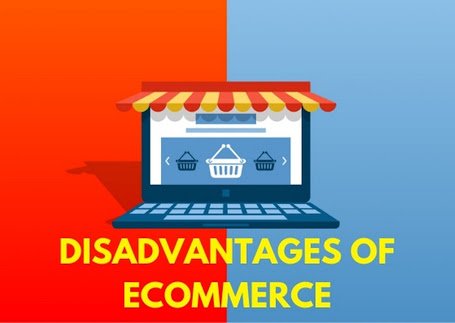
Disadvantages of E-COMMERCE….

1. Security

The biggest drawback of e-commerce is the issue of security. People fear to provide personal and financial information, even though several improvements have been made in relation to data encryption. Certain websites do not have capabilities to conduct authentic transactions. Fear of providing credit card information and risk of identity limit the growth of e-commerce.

2. Lack of privacy

Many websites do not have high encryption for secure online transaction or to protect online identity. Some websites illegally collect statistics on consumers without their permission. Lack of privacy discourages people to use internet for conducting commercial transactions,

3. Tax issue

Sales tax is another bigger issue when the buyer and seller are situated in different locations. Computation of sales tax poses problems when the buyer and seller are in different states. Another factor is that physical stores will lose business if web purchases are free from tax.

4. Fear

People fear to operate in a paperless and faceless electronic world. Some of the business organizations do not have physical existence, People do not know with whom they are conducting commercial transactions. This aspect makes people to opt physical stores for purchases

Marketing strategies for E-commerce businesses…

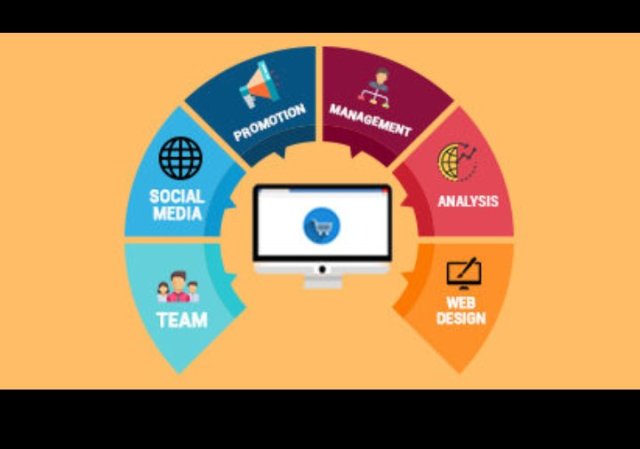
Consider us as your outsourced marketing team.Post our detailed brand audits, we can work to help you with the following :

  • Creation of your short term and long-term brand marketing plans and help in executing them.
  • Creation and execution of market development modules for your products basis the current industry trends

We can also connect with your specialist agencies and guide/supervise their work on your behalf.

image3

New Revenue Stream Creation & P&L Management

To expand your business further, we will define new business ideas, shortlist & prioritize concepts using crowd sourcing tools, rapid prototyping etc. and then also develop final product and provide a commercialization solution for the same

. Produce Original Content

The first step in setting up an eCommerce website is creating the content for it. Creating high-quality and original content will set you up for success because it will resonate with your customers in a way that makes them want to interact with you, purchase from you, and maintain a following.

Be creative. Be original.

Promoting original content is a great way to make a statement, strike a compelling idea, and make a mark on the user’s mind. There is a fine line between content that engages users and content that deters them. Why not take an extra step, put in a little effort, and create something that will be genuinely compelling?

2. Optimize your website layout

After launching your e-commerce site, it’s important to test your website’s layout, language, and placement of conversion elements. When customers visit your website, you want to make sure it’s easy and simple to check out — that they feel naturally inclined to purchase your products and that it’s abundantly clear how to do so.

You should test the language displayed on your landing and product pages, the language in your conversion elements, and even the strategic placement of icons and elements. One really nifty tool is Mouseflow — a free heatmap software that reveals valuable patterns in customer behavior on your website. One of their most popular heatmaps, the movement heatmap, reveals the most attractive parts of your website — based on visitor movement data to your website.

With a color guide, Mouseflow will tell you where your customers spend the most time, and the least amount of time! If a specific area of your page receives more attention (in white), you should consider moving your conversion elements to those more attractive areas. Test it for a week and see how your conversions change. Mouseflow’s heatmaps can help improve your conversions, increase sales, and keep prospects interested. Mouseflow is truly one of your competitor’s best kept secrets — and they offer a free account, so there’s no cost to you.

3. Content Marketing

Proper content marketing can attract more positive attention, interaction, and sustainable conversions in a way no other marketing method can. By creating and promoting original content, you are ensuring that your audience is receiving new information that matters to them on a continual basis.

Brainstorm with your team to create a list of the different types of content you wish to create, such as blog posts, videos, and newsletters. Also, make sure you are utilizing your marketing budget by consulting with experts, outsourcing work when necessary, and investing in high-quality software, subscriptions, employees, and training for your team. You will also find that if you work with the right people, many of the things you’ve paid for in the past can be done internally. Create diversity within your team and listen to everyone’s ideas.

We also suggest that you create content based on Pareto’s 80/20 rule, which means that your promotions should comprise of 80% informational content, and 20% promotional content. All of the content you publish should be relevant, interesting, and unique.

4. Social Media Marketing

Social media marketing is a very powerful tool that allows you to communicate with your industry, customers, and market in a personal way. You can utilize social media to generate engagement and interaction, boost traffic to your website, and develop a larger base of customers. Utilizing different social media platforms for different purposes also creates a rich presence for your company that diversifies your abilities, efforts, and will ultimately help you cater to your customers’ needs in a way that grows your business over time.

Maintaining a solid tone and personality of your company through social media is very important because consistency is what will create trust within your audience. In order to develop and maintain brand recognition and authority, make sure your outreach efforts are unified by ensuring your team is on the same page with your company’s communication style.

5. Email Marketing

One of the most effective forms of reaching out to your customer base is through email marketing. Although you have to be very careful about the content within your emails and who is included in your outreach, the reason email marketing has been around for so long is because it works.

In order to reach your audience most effectively, provide useful content within your emails. Make them as personal as you can, offer valuable promotions, and use it as an opportunity to socialize. Open up about what your business is doing, any events you are attending, new features or products, and be transparent about your company. You want to relate to your customers on a level that gauges their interest and keeps them engaging with your emails.

As always, make sure you are monitoring the analytics of your email marketing efforts. One great tool that can help you with this is the Google Analytics Dashboard, which is a free solution that gives you useful data about your email marketing efforts.

You can also track users who entered your website from your email campaigns with the previously mentioned tool, Mouseflow. All you have to do is set a custom URL that users “visit” when entering your site, and their entry page will contain that unique URL. A great way of doing this is to append UTM variables to your URL.

You can use Mouseflow filters or the search feature to find users whose sessions contained your custom URL. From here, you can save and export the list, perform analytics, and watch how they interacted on their site. You can also filter your heatmaps for this data to analyze how they engage with each page of your site, which elements they find most attractive, and more!

6. Search Engine Optimization

One of the most important and manual methods of optimizing a successful eCommerce website is making sure it’s optimized for search engines. With today’s Search Engine Optimization (SEO) standards, it’s now more important than ever to make sure your website is constantly updated with rich and relevant content, promotes a good user experience (UX), and is optimized to be as error-free as possible.

The content within your website should be rich, reliable, and provide information to the public that is useful and relevant to what they’re looking for. For example, if you have an eCommerce store selling camping supplies, it’s wise to provide detailed product information and possibly even host sections of your website that offer generous amounts of content that elaborates on the topics of camping, supplies, or related subjects. Using keywords within your content in a genuine way will also flag your website as a matching result in search engines when users are looking for something specific.
Use Of Google AdWords

1) Adwords works faster than SEO

The topmost benefit of Google AdWords is that it works faster than SEO. Both SEO and Google AdWords are search engine marketing strategies to generate more traffic and leads. But, a well optimized AdWords campaign can work much faster for a business to get the much coveted first spot in search.

Here are some reasons why it’s faster and more effective

  • You can focus on multiple keywords at a time.
  • You can turn the campaign on or off whenever you want to.
  • Ads which appears on the top of the page get immediate visibility.

Of course, this does not mean that you should ignore organic sources, as they have more long-term benefits. But with AdWords, there is a better chance of driving more traffic and leads instantly. Additionally, the platform is more transparent, and you know exactly what is happening with the ads.

On the other hand, search engine optimization, though very beneficial, is a long-term process. To rank for any keyword, it requires a lot of perseverance and a lot of well-written articles, and backlinks. And even then, it takes a while for them to gain the necessary authority.

Simply put. ads give you instant visibility at an instant cost, whereas SEO would give you long term success, depending on the effort you put on the quality of your content.

But, I am not here to debate one strategy’s benefits over the other. You need to use both simultaneously, but be realistic about the success time frame, and the effort/money that would be needed for both.

2) Increase brand awareness

Google AdWords, in addition to boosting traffic, clicks, and conversions, is also an efficient way to tell people about your brand. To verify this, Google partnered with Ipsos to run a study across 12 verticals, right from automobiles to retail. It was discovered that search ads lift top-of-mind awareness by an average of 6.6%.

Benefits of Google Adwords - brand awareness

Source: Google

When it comes to SEO, your rank also depends on the number of your brand name searches and its variations. That’s another reason you should aim to increase brand awareness through search, as well as display ads.

3) Reach more customers through their Gmail Inbox

One of the most used marketing strategies in every business is email marketing, which is why gmail ads can be helpful as well. In September 2015, Google integrated native Gmail ads with Google AdWords and made it available to all advertisers, which means you can reach more prospects through their gmail inbox.

Usually, Gmail ads appear on the promotion tab, but sometimes you can see it on the social tab too. These ads run on both desktops and mobiles. Since Gmail ads generally cost much less than search ads, if you have a small budget, then you can try Gmail ads as well.

What is SEO… Types of SEO..

Search Engine Optimisation

As SEO consists all the activities intended to improve the visibility and ranking of the website in organic search results.

Everyone does search on Google and the list of results displayed to the users is called “SERPs” or “Search Engine Results Pages”. If you are a site owner and if your website is not visible on the first page of SERPs, then you need to optimize your website to improve its visibility.

SEO is the art of improving the visibility of your website in SERPs through relevant keywords, and you need a webmaster to effectively….

Four Main Types

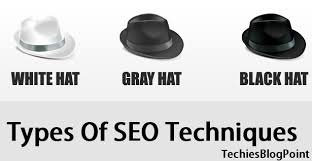
There are four main types of SEO or search engine optimization, all aimed at helping you earn greater visibility in search results:

  • White Hat;
  • Black Hat;
  • Grey Hat; and
  • Negative SEO.

The main differences have to do with how closely SEO tactics align with Google guidelines and then long it takes before you begin to see results (time), how much it costs, how risky it is, and ultimately, the value the tactics deliver to the client.

Google guidelines (Google Webmaster Guidelines) spell out what Google considers good (white hat) and bad (black hat) SEO. They are meant to help you understand what can help and hurt your rankings. While they are not laws with legal consequences, they should be taken seriously and SEOs should let clients know if they plan to violate Google Guidelines.

Black hat SEO will get you where you want to go faster. It is usually less costly because you are taking shortcuts to the top by going against published Google Webmaster Guidelines. In fact, many black hat SEO tactics are specifically spelled out in the guidelines as things you should NOT do. As such, they carry the risk that your website and/or content will rank lower, be banned from search results, or demoted the next time Google updates its ranking algorithm. That is no small concern. Google updates its ranking algorithm roughly 500-600 times a year.

Black hat SEO returns value quickly, but there is a risk the value cannot and will not be sustained.

White hat SEO techniques, on the other hand, adhere to Google Webmaster Guidelines but usually take longer and cost more to carry out. White hat SEO carries far less risk and tends to deliver lasting and compounding value over time. You’ll find most of the respected SEO and content marketing companies like Moz, Search Engine Journal, Search Engine Watch, Search Engine Land, Search Engine Roundtable, the SEM Post, Stone Temple, GSQI, and Philadelphia-area Seer Interactive and SEMRush all use and recommend white hat SEO tools and techniques.

Grey hat SEO falls somewhere in the middle as these tactics are not specifically called out in Google’s Guidelines. You should be cautious about taking this path as it is not safe to assume that just because a specific technique isn’t labeled or mentioned as being deceptive and one that will get you into trouble, that it will not interfere negatively with your rankings

Artificial intelligence

In computer science, artificial intelligence (AI), sometimes called machine intelligence, is intelligence demonstrated by machines, in contrast to the natural intelligence displayed by humans. Colloquially, the term “artificial intelligence” is often used to describe machines (or computers) that mimic “cognitive” functions that humans associate with the human mind, such as “learning” and “problem solving”

The extraordinary invention – Sophia Robot

Sophia is a social humanoid robot developed by Hong Kong based company Hanson Robotics. Sophia was activated on February 14, 2016, and made its first public appearance at South by Southwest Festival (SXSW) in mid-March 2016 in Austin, Texas, United States. It is able to display more than 50 facial expressions.

Sophia has been covered by media around the globe and has participated in many high-profile interviews. In October 2017, Sophia became the first robot to receive citizenship of any country. In November 2017, Sophia was named the United Nations Development Programme’s first ever Innovation Champion, and is the first non-human to be given any United Nations title

Google analytics

Google Analytics is a web analytics service offered by Google that tracks and reports website traffic, currently as a platform inside the Google Marketing Platform brand. Google launched the service in November 2005 after acquiring developer Urchin

Features of google analytics-

Google analytics is used to track the website activity of the users such as session duration, pages per session, bounce rate etc. along with the information on the source of the traffic. It can be integrated with Google Ads, with which users can review online campaigns by tracking landing page quality and conversions (goals). Goals might include sales, lead generation, viewing a specific page, or downloading a particular file. Google Analytics’ approach is to show high-level, dashboard-type data for the casual user, and more in-depth data further into the report set. Google Analytics analysis can identify poorly performing pages with techniques such as funnel visualization, where visitors came from (referrers), how long they stayed on the website and their geographical position.

Affiliate marketing

Affiliate marketing is a type of performance-based marketing in which a business rewards one or more affiliates for each visitor or customer brought by the affiliate’s own marketing efforts

Affiliate marketing overlaps with other Internet marketing methods to some degree, because affiliates often use regular advertising methods. Those methods include organic search engine optimization (SEO), paid search engine marketing (PPC – Pay Per Click), e-mail marketing, content marketing, and (in some sense) display advertising. On the other hand, affiliates sometimes use less orthodox techniques, such as publishing reviews of products or services offered by a partner

Affiliate marketing is commonly confused with referral marketing, as both forms of marketing use third parties to drive sales to the retailer. The two forms of marketing are differentiated, however, in how they drive sales, where affiliate marketing relies purely on financial motivations, while referral marketing relies more on trust and personal relationships.

E-Marketing….!

E-Marketing (Electronic Marketing) are also known as Internet Marketing, Web Marketing, Digital Marketing, or Online Marketing. E-marketing is the process of marketing a product or service using the Internet. Emarkerting not only includes marketing on the Internet, but also includes marketing done via e-mail and wireless media. It uses a range of technologies to help connect businesses to their customers.

e-marketing

Like many other media channels, e-marketing is also a part of integrated marketing communications (IMC), which helps a brand grow across different channels. E-marketing has become a pivotal tactic in the marketing strategy adopted by companies using several digital media channels.

What is Copyright

Copyright is the exclusive right, given to the creator of a creative work, to reproduce the work, usually for a limited time.[1][2][3][4][5] The creative work may be in a literary, artistic or musical form. Copyright is intended to protect the original expression of an idea in the form of a creative work, but not the idea itself.[6][7][8] A copyright is subject to limitations based on public interest considerations, such as the fair use doctrine in the United States. Some jurisdictions require “fixing” copyrighted works in a tangible form. It is often shared among multiple authors, each of whom holds a set of rights to use or license the work, and who are commonly referred to as rights holders.[citation needed][9][10][11][12] These rights frequently include reproduction, control over derivative works, distribution, public performance, and moral rights such as attribution.[13]

Copyrights can be granted by public law and are in that case considered “territorial rights”. This means that copyrights granted by the law of a certain state, do not extend beyond the territory of that specific jurisdiction. Copyrights of this type vary by country; many countries, and sometimes a large group of countries, have made agreements with other countries on procedures applicable when works “cross” national borders or national rights are inconsistent.[14]

Typically, the public law duration of a copyright expires 50 to 100 years after the creator dies, depending on the jurisdiction. Some countries require certain copyright formalities to establishing copyright, others recognize copyright in any completed work, without formal registration.

Design a site like this with WordPress.com
Get started